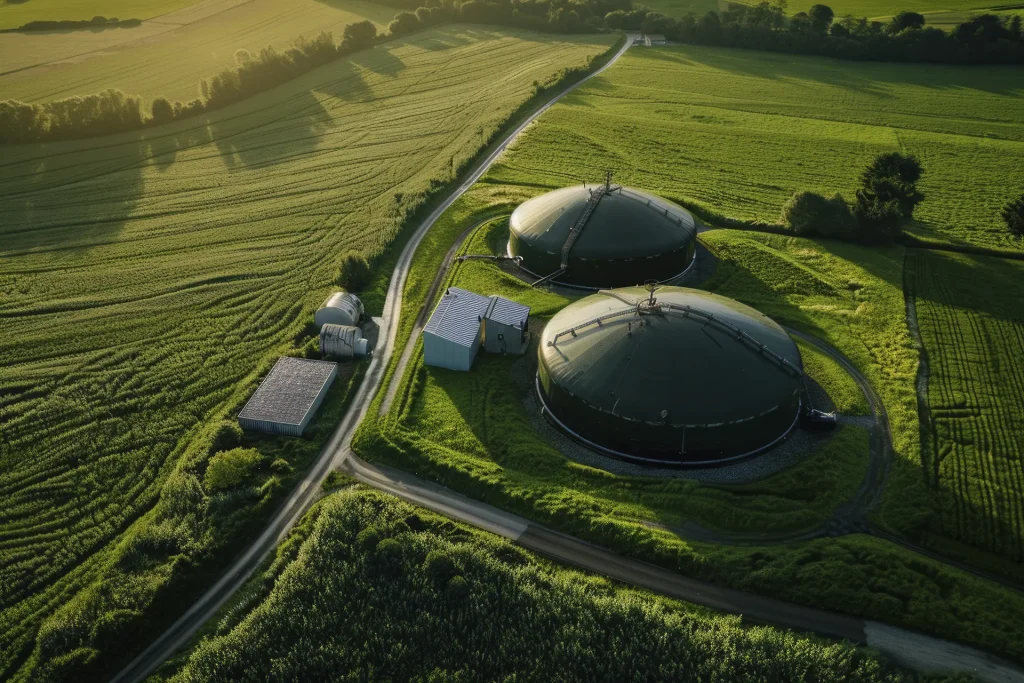
Biogas is positioned as a renewable energy source with great potential. However, raw biogas contains impurities that pose technical and environmental problems. The main one is hydrogen sulphide (H₂S), a corrosive sulphur compound that must be removed. Biogas desulphurisation is the process that removes these sulphur compounds, ensuring that biogas can truly serve as a clean and sustainable energy source.
Biogas and the sulphur challenge
Biogas is produced from the anaerobic digestion of organic waste, and its main composition is methane (CH₄) and carbon dioxide (CO₂). However, it also usually contains hydrogen sulphide (H₂S), whose concentration varies depending on the substrate, ranging from 0.1% to 3% (approx. 1,000–30,000 ppm).
The presence of H₂S poses a serious challenge: during combustion, it transforms into sulphuric acid (H₂SO₄), which accelerates corrosion in engines, pipes and equipment. Even at low levels, it causes cumulative damage and increases maintenance costs. Furthermore, when burned, it generates sulphur dioxide (SO₂) emissions, which are responsible for acid rain and unpleasant odours, impacting the health of workers and nearby communities as well as the environment.
Therefore, the removal of hydrogen sulphide is an essential step in ensuring that biogas can be used as a safe and truly sustainable fuel.
What is biogas desulphurisation?
Biogas desulphurisation consists of removing H₂S and other sulphur compounds from biogas. It is a key purification stage that produces safer, more stable biogas with better energy efficiency.
By reducing the H₂S content, infrastructure is protected against corrosion, polluting emissions are avoided, and the use of biogas in applications such as electricity generation, heating, or vehicle fuel is facilitated.
In addition, desulphurisation ensures that the gas retains its energy value, transforming it into higher quality biogas or even biomethane, a renewable fuel that can be injected into natural gas networks or used directly in sustainable mobility. In short, solving the “sulphur problem” is what allows biogas to go from being a raw resource to becoming a clean, profitable energy source that is aligned with sustainability goals.
Methods for Biogas Desulphurisation
There are various techniques for biogas desulphurisation, and the choice depends on the H₂S level, flow rate and conditions at each plant. Among the most common approaches are:
In-situ desulphurisation: The most widespread strategy in the industry is the dosing of iron compounds directly into the anaerobic digester, before the H₂S is released with the biogas.
Iron hydroxides (N-Bio): Compared to ferric salts, iron hydroxides from the N-Bio Solutions range offer a safe and efficient alternative. Their application in solid form (powder or pellets) allows for a gradual reaction with H₂S, reducing its concentration in a stable manner without affecting the pH of the digester. In addition, they add iron and sulphur to the digestate, improving its value as a fertiliser.
Ferric salts (such as FeCl₃): Their main advantage is their immediate reaction with H₂S, which allows for rapid desulphurisation. However, they have significant limitations: they are corrosive, acidify the medium, require specific liquid dosing systems and do not generate a buffering effect, so if dosing is interrupted, H₂S levels can rise rapidly.
Oxygen injection: Some plants choose to introduce micro-amounts of oxygen into the digester to oxidise H₂S into elemental sulphur using bacteria. This method can partially reduce the sulphur content without chemical additives, but it involves risks: overdosing can negatively affect methane production and generate explosive mixtures.
Other methods (biological and physical): There are alternatives such as biofiltration or biotrickling, which use microorganisms to oxidise H₂S, and physical processes such as activated carbon adsorption or liquid scrubbing. Although effective in certain contexts, they tend to require higher operating and maintenance costs and are not always practical for large-scale biogas plants.
Why biogas desulphurisation is key to clean energy
Ultimately, removing sulphur from biogas is what makes this renewable fuel truly clean and practical. Biogas desulphurisation is vital for several reasons:
Equipment protection: Desulphurisation prevents severe corrosion of engines, turbines and pipes. Otherwise, H₂S would form acids during combustion that would corrode metal surfaces. By cleaning the gas, operators extend the service life of biogas generators and avoid costly damage. Gas engine manufacturers typically require H₂S levels below 50-250 ppm to ensure reliable operation, underscoring the importance of sulphur removal for machinery longevity.
Reduction of harmful emissions: Clean biogas produces far fewer air pollutants. If H₂S is not removed, combustion of the gas releases sulphur dioxide (SO₂), which contributes to acid rain and air pollution. Desulphurisation of biogas eliminates these sulphur emissions, meaning that biogas can be burned with minimal environmental impact: a much greener alternative to fossil fuels.
Improved safety and odour control: Hydrogen sulphide has a noxious odour and is highly toxic, even at low concentrations. Removing H₂S makes biogas odourless and non-toxic, protecting workers and communities. This improves overall safety and eliminates the rotten egg smell associated with raw biogas, making biogas projects more neighbourhood-friendly.
Improved energy quality: By removing H₂S and other impurities, the resulting biogas has a higher percentage of methane. This increases the calorific value (energy content) of the fuel. In other words, each cubic metre of clean biogas contains more usable energy. The fuel burns more efficiently and cleanly, which is especially important for applications such as vehicle fuel or power generation, where fuel quality is important.
Ensuring compatibility and compliance: Many advanced uses of biogas require it to be as clean as natural gas from pipelines. For example, to inject biomethane into the national gas grid or use it in vehicles, sulphur levels must be extremely low (often only a few ppm). In some regions, regulations limit H₂S in biogas to less than 10 ppm for injection into the grid. Biogas desulphurisation enables these strict standards to be met and allows renewable biogas to seamlessly replace fossil natural gas in pipelines and engines. It also means that the CO₂ by-product of biogas upgrading can be released or used without causing odour or corrosion problems.
In summary, biogas desulphurisation is a key step in harnessing the full environmental benefits of biogas. By actively removing sulphur compounds, biogas is transformed from a raw waste by-product into a clean and reliable source of energy. This process ensures that biogas can be used in the same way as traditional natural gas, but without the drawbacks of corrosion or pollution. It also reaffirms the role of biogas in the transition to clean energy, converting organic waste into useful energy with minimal emissions. Through the effective removal of H₂S, biogas becomes not only renewable, but truly clean, helping to power our world while protecting our equipment, our air and our communities.
Frequently asked questions about biogas desulphurisation
¿Qué es el sulfuro de hidrógeno (H₂S) y por qué es un problema en el biogás?
Hydrogen sulphide (H₂S) is a colourless, toxic and highly corrosive gas that forms naturally during the anaerobic digestion of organic matter. Its presence in biogas is common, as sulphate-reducing bacteria generate it from the sulphur compounds present in waste. Although it may seem like a minor impurity, H₂S poses a major challenge for the use of biogas: it has a characteristic “rotten egg” odour, is harmful to health even in low concentrations, and when combusted, it transforms into sulphuric acid (H₂SO₄), which accelerates the corrosion of engines, pipes and boilers. In addition, the combustion of biogas with H₂S produces sulphur dioxide (SO₂), a pollutant associated with acid rain. For these reasons, the removal of H₂S is essential to ensure safety, extend the life of equipment and promote biogas as a renewable and sustainable fuel.
¿Por qué la eliminación de H₂S es clave para la energía limpia?
Removing H₂S from biogas is a fundamental step in ensuring that this renewable resource can be considered a true source of clean energy. Firstly, its removal protects facilities from corrosion: engines, boilers, turbines and pipes are seriously affected if biogas contains sulphur, which increases maintenance costs and reduces plant efficiency. Secondly, desulphurisation prevents polluting emissions. If not removed, H₂S is converted into sulphur dioxide (SO₂) during combustion, contributing to acid rain and environmental degradation. It also improves safety, as H₂S is a poisonous and strong-smelling gas, harmful to both workers and nearby communities. Finally, purifying biogas increases its energy value, making it possible to obtain biomethane of a quality comparable to natural gas. In this way, the removal of H₂S makes biogas a sustainable, safe and competitive fuel in the transition to clean energy.
¿Qué métodos existen para la desulfuración del biogás?
Biogas desulphurisation can be carried out using different techniques, and the choice depends on factors such as H₂S concentration, gas flow rate and the conditions at each plant. Among the most commonly used methods is the dosing of iron compounds, both ferric salts (such as ferric chloride, which acts immediately) and iron hydroxides, which react progressively and offer a more stable buffering effect, as well as improving the fertilising value of the digestate. Another strategy is oxygen injection or microaeration, which promotes the biological oxidation of H₂S, although it requires strict control to avoid the risk of explosion or methane losses. There are also adsorption systems using activated carbon or iron oxides, which are effective in reducing H₂S to very low levels, although they require regeneration or replacement of the material. Finally, biological methods, such as biofilters or biotrickling, use microorganisms to oxidise H₂S in a sustainable manner. In many cases, plants combine several techniques to ensure clean, safe biogas suitable for advanced energy applications.
Hydrogen sulphide (H2S) is a chemical compound that occurs as a colourless gas, known for its strong smell of rotten eggs. This gas, in addition to being highly toxic, is corrosive, which poses a significant challenge in various sectors such as biogas, wastewater treatment plants (WWTPs) and industrial processes such as the food, paper and chemical industries. H2S is formed naturally during the decomposition of organic matter and in anaerobic processes, which is why it commonly appears in biogas digesters. The need to control the presence of H2S is not only a matter of occupational safety, but also of infrastructure protection and compliance with environmental regulations.
Even in low concentrations (ppm), H2S can cause a strong, unpleasant odour that can be a nuisance to workers and nearby communities. At higher concentrations, the gas is not only a health hazard, but also accelerates corrosion of equipment and pipes, increasing maintenance and repair costs. For these reasons, effective H2S removal is crucial to ensuring workplace safety and the integrity of equipment and facilities.
The environmental impact of H₂S and why eliminating it is key
Hydrogen sulphide (H2S) has a significant environmental impact when released into the atmosphere. It can cause soil and water acidification, contribute to the formation of acid rain, and damage both natural ecosystems and infrastructure.
The removal of H2S is key to protecting the environment and public health. In the case of biogas, reducing this compound ensures more sustainable production and prevents polluting emissions. Implementing biogas desulphurisation technologies enables compliance with environmental regulations, improves plant performance and increases social acceptance of these facilities.
In short, managing H2S correctly is not only a legal obligation, but also a sustainability strategy that strengthens companies’ reputations and ensures the long-term development of their operations.
Chemical methods for removing H2S
Chemical methods for H2S removal are widely used due to their effectiveness and speed in reducing H2S concentrations in gases and liquids. These methods involve the chemical reaction of H2S with specific reagents to form less hazardous compounds.
Another option is to use reagents that react directly with H2S, such as iron hydroxides. These compounds react with H2S to form metal sulphides, which are solids and can be easily separated from the medium in which they are found. This method is particularly popular for removing H2S from biogas due to its relatively low cost and the simplicity of the process. In addition, iron hydroxides offer a buffering effect that helps maintain the stability of the desulphurisation process.
In this regard, our N-Bio Solutions product represents an innovative and sustainable alternative, designed to optimise H2S removal at source. Its direct application in the digester allows for safe and efficient control, improving biogas quality and reducing operating costs.
Physical methods for H2S removal
Physical methods for removing H2S are based on separating the gas from the stream to be treated without the intervention of chemical reactions. These include dry adsorption, which involves the use of porous materials such as activated carbon to capture H2S, and wet scrubbing, which uses liquid solutions to absorb H2S from the gas.
In general, physical methods for H2S removal are relatively simple processes; however, they are usually more suitable for low concentrations of H2S and may not be as effective in situations where the gas is present in high concentrations. In addition, they often involve higher operating and maintenance costs due to the need to regenerate or replace the materials used, issues that must be considered when selecting an H2S removal method.
Biological methods for the sustainable removal of H2S
Biological methods for H2S removal rely on the action of certain microorganisms to oxidise hydrogen sulphide into less harmful compounds, such as elemental sulphur or sulphate. These processes, known as biofiltration and biotrickling, are notable for their sustainability and low environmental impact.
Biological methods are attractive for H2S removal because they do not generate hazardous waste and can operate continuously with relatively low operating costs. Furthermore, they do not require the use of chemicals, which improves process safety.
Despite their advantages, biological methods have certain limitations: they require a long start-up time and may be less effective under extreme operating conditions.
On-site biogas desulphurisation with iron hydroxides: a practical solution
In-situ desulphurisation of biogas using iron hydroxides is an efficient and economical method that has gained popularity in recent years. This process involves adding iron compounds directly to the anaerobic digester, where they react with the H2S present in the biogas to form iron sulphides that remain integrated in the digestate, effectively reducing the concentration of H2S in the biogas.
The use of iron hydroxides offers several advantages:
Firstly, the process is straightforward and does not require complex equipment, which reduces the investment cost.
Furthermore, iron hydroxides are safe to handle, non-corrosive and non-toxic, which improves operational safety.
They also act as buffers, stabilising H2S levels without affecting the pH of the digester.
However, the effectiveness of the process can depend on several factors, such as the concentration of H2S and the conditions of the digester, so it is important to monitor it constantly to adjust the dosage of iron hydroxides to ensure optimal performance. Although the reduction of H2S is not immediate when first administered, once the process has stabilised, biogas desulphurisation is highly effective. Despite these considerations, in-situ desulphurisation with iron hydroxides has established itself as a practical and efficient solution for many biogas plants, combining efficiency, safety and cost savings.
Frequently asked questions about H2S removal in biogas
¿Cuál es el método más efectivo para eliminar H2S en biogás?
There is no single method that works for all plants. The choice depends on factors such as H2S concentration, plant size and substrate type. In many cases, iron-based compounds—such as hydroxides—offer an efficient and safe solution, as they allow biogas to be desulphurised directly in the digester at low operating cost.
¿Qué debo tener en cuenta al elegir un método de eliminación de H2S?
When selecting an H2S removal method, it is important to consider factors such as investment cost, operating costs, process safety, environmental impact, and compatibility with the existing system. Resource availability and technical expertise may also influence the choice of the most suitable method for a specific application.
¿Cómo afecta el H2S a la salud?
Hydrogen sulphide is toxic even in low concentrations. It can cause irritation to the eyes and respiratory tract, headaches, dizziness and even loss of consciousness. It is therefore essential to reduce its presence both for occupational safety and to protect the environment.
In summary, the effective removal of H2S is a priority in many industries due to its health and environmental risks, as well as its impact on product quality and infrastructure integrity. Selecting the appropriate method and implementing sustainable technologies are essential to mitigating these risks and promoting responsible industrial development.
Why are iron oxides the sustainable alternative for industrial water treatment?
Industries generate large volumes of pollutant-laden wastewater. This reality poses a major environmental challenge. Therefore, finding effective and environmentally friendly industrial water treatment methods has become a priority. However, many traditional solutions involve aggressive chemicals or costly processes. In this context, iron oxides emerge as a sustainable and efficient alternative to purify industrial effluents. This approach takes care of both the environment and business economics.
What are iron oxides and why are they an environmentally friendly option?
Iron oxides are naturally occurring compounds formed from iron and oxygen, widely present in the earth’s crust. For example, haematite and magnetite are two very common iron oxides. They are known for their characteristic reddish or brownish colour. In addition, they are obtained from abundant sources and even as a by-product of other industries. This makes them low-cost and readily available materials. Their natural and non-toxic character means that after use in water treatment they generate inert residues. These by-products do not harm the environment. In other words, by using iron oxides we avoid adding hazardous substances to the water. In addition, we make use of common mineral resources and align ourselves with the principles of sustainability and circular economy.
Uses of iron oxides in industrial water treatment
Iron oxides have proven to be versatile in the treatment of different types of industrial wastewater. Below, we explore some of their most prominent uses.
Removal of heavy metals and metalloids: Effluents from industrial processes often contain toxic metals such as chromium, nickel, arsenic or lead. For example, water from the metallurgical or mining industry can carry traces of these elements. Iron oxides act as adsorbents, capturing these metals on their surface. In this way they manage to reduce their concentration in the water. In addition to being effective, they offer a low-cost method. This is possible thanks to the reuse of iron oxides from industrial waste. In this way, materials that would otherwise be waste are put to a second use. As a result, watercourses are protected from hazardous pollutants without incurring high costs.
Nutrient (phosphorus) removal: Many industrial and urban effluents contain nutrients such as phosphorus and nitrogen. In excess, these elements cause algal blooms and deterioration of rivers and lakes. In this respect, iron compounds are used to remove dissolved phosphorus. For example, ferric salts added to wastewater generate iron oxides and hydroxides that trap phosphates. These react and form insoluble compounds that precipitate, making it easier to separate them from the liquid. This prevents the eutrophication of water bodies receiving industrial discharges in a safe and environmentally friendly way.
Sulphide and odour control: In certain industrial processes, such as in anaerobic treatment plants, refineries or paper mills, water may contain dissolved hydrogen sulphide (H₂S) or other sulphide compounds. These generate unpleasant odours and corrosion. However, iron oxides can help to mitigate this problem. On contact with hydrogen sulphide water, iron reacts with H₂S. Solid iron sulphide, a black, inert precipitate, is formed. As a result, the odour is neutralised and the sulphur is removed from the water. Therefore, the use of iron oxides contributes to a safer working environment. It also reduces the emission of nuisance gases into the atmosphere.
Oxidation of organic pollutants: Another innovative application of iron oxides is their use as catalysts in advanced oxidation processes. An example of this is the heterogeneous Fenton process. In this case, the iron present in the oxides reacts in the presence of hydrogen peroxide or other oxidants. This generates highly reactive free radicals. The presence of iron oxides helps to degrade complex organic compounds, such as dyes, phenols or pesticides. All this is achieved without the need to add large amounts of additional chemical reagents. Although these technologies are emerging, they represent a promising avenue for dealing with difficult pollutants in a cleaner way.
Nalón Minerals’ solutions with iron oxides for industrial water
At Nalón Minerals we firmly believe in the potential of iron oxides as a sustainable and effective solution for the treatment of industrial water and gases. That is why we have developed specialised products that contribute to a more responsible management of resources and to the improvement of the environmental performance of industries. Our N-BIO range is composed of high quality iron oxides and hydroxides, designed to provide efficient and environmentally friendly treatment.
Our products can, for example, remove hydrogen sulphide from biogas and treat the digestate generated , facilitating its subsequent use as fertiliser. They can also be applied in industrialwaters, helping to reduce the concentration of heavy metals and unwanted nutrients in effluents.
Benefits of using iron oxides for industrial water treatment
The iron oxide approach offers numerous advantages over conventional methods.
Sustainability and reduced environmental impact: Unlike aggressive chemical treatments, the use of iron oxides does not introduce toxic substances into the process. The by-products generated (such as iron-containing sludge, phosphates or sulphides) are usually stable. They can even be managed as non-hazardous waste. For example, sludge rich in iron and phosphorus could be reused as a soil amendment or raw material. This would help to close the life cycle of the materials. This approach reduces the environmental footprint of effluent treatment.
Proven efficacy: Numerous studies and industrial experiences have proven this. Iron oxides are effective in removing a wide range of contaminants. In addition, they often achieve high removal rates of heavy metals and phosphorus when properly applied. They also control odours and improve overall effluent quality. All this helps companies comply with today’s stringent discharge regulations. At the same time, it helps to protect aquatic ecosystems.
Reduced cost: As abundant materials, sometimes obtained from waste from other industries, iron oxides are inexpensive. Their implementation can reduce dependence on expensive imported chemicals. In addition, investment in iron oxide-based systems is often affordable and maintenance is easy. In the long term, this alternative can represent significant savings. This is especially true when compared to more complex technologies or reagent-intensive processes.
Compatibility and simplicity: Integrating the use of iron oxides into an existing treatment plant is relatively straightforward. They can usually be dosed as an additive in the process. They can also be used as a filter medium in adsorption beds. It does not require highly specialised equipment, which facilitates its adoption in installations of all sizes. Moreover, being a passive technique in many cases, energy consumption is minimal compared to other advanced processes. For example, it is sufficient to let the water pass through a bed of iron oxide. This way adsorption takes place without the need for high energy consumption.
If you are looking for a responsible alternative for water treatment in your industry, we will be happy to help you. Contact us and we will advise you on how to integrate our iron oxides into your production process in a simple and effective way.
Biogas is a renewable energy source obtained through the anaerobic decomposition of organic waste. However, this fuel gas often contains a proportion of hydrogen sulphide (H₂S), a corrosive and toxic compound. Therefore, it is necessary to remove H₂S through desulphurisation processes before biogas can be used as energy. In the following, we describe the current methods for desulphurising biogas, indicating their advantages and disadvantages.
Chemical methods for desulphurisation of biogas
Chemical methods use compounds to convert hydrogen sulphide into inert substances. For example, iron salts such as ferric chloride (FeCl₃) are used. It is also common to inject oxygen to oxidise the H₂S and transform it into solid sulphur or sulphate. This technique is fast acting and removes the corrosive gas efficiently. However, it has significant drawbacks. It consumes a lot of energy and generates solid waste that has to be treated afterwards. In addition, it requires very controlled operating conditions to function properly.
Biological methods of desulphurisation of biogas
These methods use micro-organisms (bacteria) that consume H₂S as an energy source. The bacteria oxidise the sulphur to sulphate or elemental sulphur, removing it from the biogas in a natural way. In addition, it is often an economical and environmentally friendly process because it uses living organisms without the need for aggressive chemical reagents. However, biological desulphurisation is relatively slow compared to other methods. It is also sensitive to changes in temperature, pH or other environmental conditions. Even other substances present in the biogas can inhibit the activity of the bacteria and reduce the efficiency of the process.
At Nalón Minerals we work on solutions adapted to these living environments. Find out more about our sustainable N-Bio Solutions lines.
Physical methods for biogas desulphurisation
Physical methods remove H₂S without direct chemical reactions, by absorption or adsorption processes. In adsorption, the biogas passes through a liquid that traps the H₂S (e.g. water or alkaline solutions). The hydrogen sulphide is thus dissolved in the liquid and separated from the gas. In adsorption, the biogas is passed through a solid material (e.g. activated carbon, sponge iron or zeolite). This material retains the H₂S on its surface, separating it from the gaseous flow. In general, these physical methods are versatile and simple to implement in a biogas plant. However, they have some limitations. Saturation of the liquid or solid adsorbent reduces their efficiency over time. In addition, these systems can cause pressure drop in the gas flow. Another drawback is that they can lose efficiency if the biogas contains other impurities that foul the adsorbent or adsorbent medium.
Desulphurisation within the digester
It is possible to remove H₂S from inside the anaerobic digester, before the gas is released to the outside. This method adds iron compounds (special oxides and hydroxides) directly into the biogas reactor. These additives capture H₂S as soon as it is formed during digestion. The resulting reaction forms iron sulphide (FeS) and elemental sulphur inside the tank. The toxic gas is thus removed before it is released along with the biogas. One of its advantages is that it prevents the accumulation of H₂S outside the reactor. This reduces the risks of corrosion, toxicity and even explosions in the plant. In addition, it is a clean and economical process that simplifies the design of the installation by not requiring additional external equipment. As an additional benefit, sulphur and iron are retained in the digestate (digestate residue), improving its properties as an organic fertiliser.
Conclusions
In short, removing H₂S from biogas is a fundamental step. Only then can this energy source be used safely and sustainably. The various existing methods meet this objective, but each has its own advantages and disadvantages. Therefore, the choice of desulphurisation method depends on factors such as H₂S concentration, available resources and the operating conditions of each project. Applying the right technique ensures cleaner biogas and protects the plant. It also helps to obtain better quality renewable energy.
Quick comparison of methods
Method
Advantages
Disadvantages
Chemist
Fast, efficient
Costly, waste, requires monitoring
Biological
Ecological, economical
Slow, sensitive to variations
Physicist
Simple, versatile
Saturation, pressure drop
In situ
Clean, economical, safe
Requires specialised additives
At Nalón Minerals, we help companies find the best desulphurisation strategy. Our high purity, low environmental impact products offer safety, performance and sustainability.
Biogas is emerging as a promising renewable fuel in the quest for clean energy. However, raw biogas contains impurities that pose technical and environmental challenges. Chief among these is hydrogen sulphide (H₂S), a corrosive sulphur compound that must be removed. Biogas desulphurisation is the process that eliminates these sulphur compounds, ensuring biogas can truly serve as a clean and sustainable energy source. This article explains what biogas desulphurisation is and why it is key to clean energy, with a focus on active solutions and real-world benefits.
Biogas and the Sulphur Challenge
Biogas forms when organic waste decomposes in an oxygen-free environment (anaerobic digestion). It is primarily composed of methane (CH₄) and carbon dioxide (CO₂), with traces of other gases such as hydrogen sulphide (H₂S). In anaerobic digesters, naturally occurring sulphates in the waste are converted by bacteria into H₂S gas. As a result, raw biogas often contains about 0.1–3% H₂S (roughly 1,000–30,000 ppm), though the exact amount depends on the feedstock.
However, H₂S is a major problem for biogas use. This gas is corrosive, toxic, and emits a strong “rotten egg” odour. If H₂S remains in the biogas, it can corrode pipelines, engines, and other equipment. For example, during combustion H₂S will form sulphuric acid (H₂SO₄), an extremely corrosive substance that can rapidly damage engines and boilers. Even at low concentrations, H₂S causes cumulative corrosion and can significantly shorten the lifespan of machinery. Furthermore, burning biogas with H₂S produces sulphur dioxide (SO₂) emissions, leading to foul odours and acid rain. These issues not only increase maintenance costs but also pose health and environmental risks. H₂S is poisonous even in small doses and must be handled with care. Therefore, removing H₂S from biogas is absolutely critical before the gas can be used as a fuel.
What is Biogas Desulphurisation?
Biogas desulphurisation refers to removing H₂S and other sulphur compounds from biogas. In simple terms, it is a cleaning step that purifies biogas by stripping out the corrosive sulphur content. This process ensures the biogas is safe and suitable for applications like electricity generation, heating, or vehicle fuel. By eliminating H₂S, we protect equipment and prevent harmful emissions, effectively upgrading biogas into a cleaner energy source.
Importantly, biogas desulphurisation preserves the energy value of the gas while removing only the undesirable elements. The result is a higher-quality biogas (often called biomethane once purified) that can perform on par with natural gas. This upgrading step is essential for improving the gas quality and avoiding technical or environmental issues. In fact, without desulphurisation, the high sulphur content would make it nearly impossible to use biogas widely as a reliable fuel. Addressing this “sulphur problem” is crucial to harnessing the full potential of biogas as a clean and sustainable energy source.
Methods of Biogas Desulphurisation
There are several effective techniques for biogas desulphurisation. The method chosen depends on the H₂S level, flow rate, and specific project needs. For example, common approaches include:
Chemical Scrubbing: Using chemical agents (such as ferric chloride or even oxygen) to react with H₂S and convert it into solid sulphur compounds. These solids (like iron sulphide or elemental sulphur) are then removed from the gas stream. Chemical methods act quickly and achieve high removal efficiency, though they can produce some waste and require chemicals.
Biological Desulphurisation: Employing specialised microorganisms to consume or oxidize H₂S into harmless forms. For instance, certain bacteria can convert H₂S into sulphate or elemental sulphur. Biological scrubbing systems (biofilters or biotrickling filters) are environmentally friendly and cost-effective, as they often only need nutrients and a bit of air. However, they operate best within specific temperature and pH ranges and may be slower than chemical methods.
Adsorption and Absorption: Removing H₂S by capturing it in a material or liquid. In adsorption systems, the biogas passes through a solid medium like activated carbon or iron oxide (“iron sponge”) that binds H₂S onto its surface. This is a straightforward method ideal for polishing gas to very low H₂S levels, though the media needs periodic replacement or regeneration. In absorption processes, the gas is bubbled through a liquid solution (e.g. water or an alkaline solution) that dissolves H₂S. The H₂S-laden liquid is then treated to remove or neutralize the sulphur. These physical methods are versatile and can achieve deep cleaning of the gas, albeit with considerations like absorbent saturation and pressure drop in the system.
Each of these methods can drastically reduce H₂S content, often bringing it down to just a few parts per million. In practice, facilities might use a combination of techniques to ensure complete H₂S removal. For example, a biogas plant could use an initial chemical scrubber to knock out bulk H₂S and then a polishing activated carbon filter to catch any remaining traces. The end goal is the same: safe, clean biogas ready for use in energy generation.
Why Desulphurising Biogas is Key to Clean Energy
Ultimately, removing sulphur from biogas is what allows this renewable fuel to be truly clean and practical. Biogas desulphurisation is vital for several reasons:
Protecting Equipment: Desulphurisation prevents severe corrosion of engines, turbines, and pipes. H₂S would otherwise form acids during combustion that eat away at metal surfaces. By cleaning the gas, operators extend the lifespan of biogas generators and avoid costly damage. Gas engine manufacturers often require H₂S levels below about 50–250 ppm to ensure reliable operation, underscoring how important sulphur removal is for machinery longevity.
Reducing Harmful Emissions: Clean biogas produces far fewer air pollutants. If H₂S is not removed, burning the gas releases sulphur dioxide (SO₂) which contributes to acid rain and air pollution. Desulphurising the biogas eliminates these sulphur emissions, meaning biogas can be burned with minimal environmental impact – a much greener alternative to fossil fuels.
Enhancing Safety and Odour Control: Hydrogen sulphide has a noxious smell and is highly toxic, even at low concentrations. Removing H₂S makes the biogas odorless and non-toxic, which protects workers and communities. This improves overall safety and eliminates the rotten-egg odour associated with raw biogas, making biogas projects more neighborhood-friendly.
Improving Energy Quality: When H₂S and other impurities are removed, the resulting biogas has a higher percentage of methane. This raises the calorific value (energy content) of the fuel. In other words, each cubic meter of cleaned biogas contains more usable energy. The fuel burns more efficiently and cleanly, which is especially important for applications like vehicle fuel or power generation where fuel quality matters.
Ensuring Compatibility and Compliance: Many advanced uses of biogas require it to be as clean as pipeline natural gas. For example, to inject biomethane into the national gas grid or use it in vehicles, sulphur levels must be extremely low (often just a few ppm). In some regions, regulations limit H₂S in biogas to under 10 ppm for grid injection. Biogas desulphurisation enables compliance with these strict standards, allowing renewable biogas to replace fossil natural gas in pipelines and engines seamlessly. It also means the CO₂ byproduct from biogas upgrading can be released or utilized without causing odour or corrosion issues.
In summary, biogas desulphurisation is a key step that unlocks the full environmental benefit of biogas. By actively removing sulphur compounds, we transform biogas from a raw by-product of waste into a clean, reliable energy source. This process ensures that biogas can be used much like traditional natural gas, but without the downsides of corrosion or pollution. Moreover, it affirms biogas’s role in the clean energy transition – turning organic waste into useful energy with minimal emissions. Through effective H₂S removal, biogas becomes not only renewable but truly clean, helping power our world while protecting our equipment, our air, and our communities.