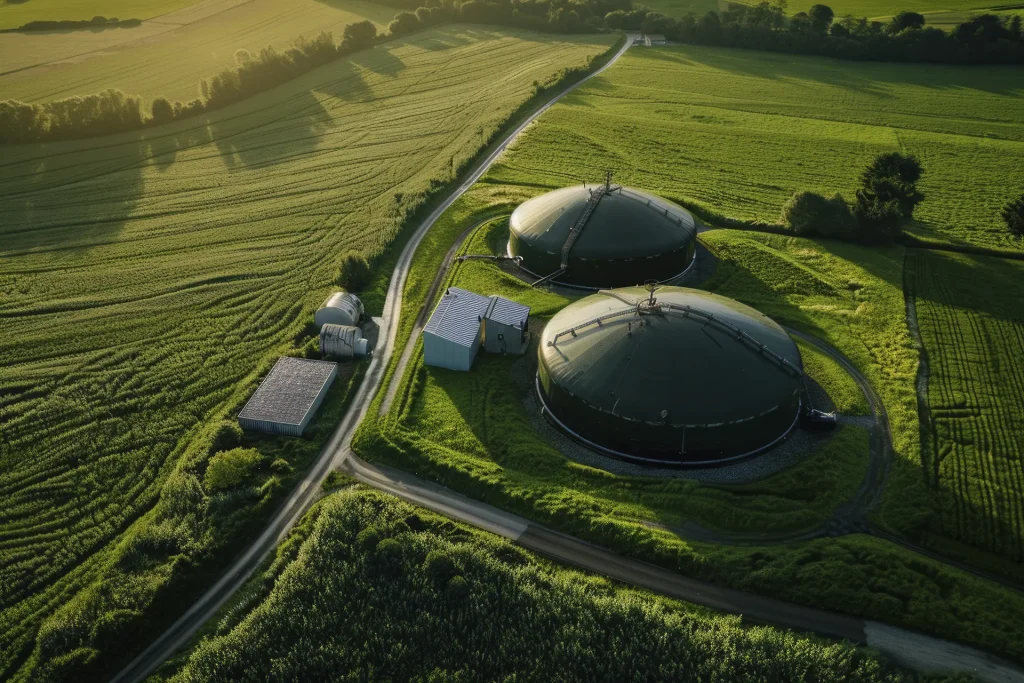
La desulfuración de biogás es un paso decisivo para poder aprovechar el gas como fuente de energía segura, eficiente y alineada con los objetivos climáticos europeos. Entre las tecnologías más utilizadas para la eliminación de H₂S destacan dos enfoques muy extendidos: el uso de hidróxidos de hierro dosificados directamente en el digestor y los filtros de carbón activado instalados en la línea de gas.
Aunque ambos métodos permiten reducir el sulfuro de hidrógeno, su comportamiento técnico, sus costes y su encaje en la operación diaria de una planta de biogás son muy diferentes. En este artículo analizamos en detalle esta comparativa técnica, con especial foco en las soluciones basadas en hidróxidos de hierro como las utilizadas por Nalón Minerals.
Desulfuración de biogás: por qué es crítico elegir bien la tecnología
La desulfuración de biogás tiene tres objetivos principales:
Proteger equipos y tuberías frente a la corrosión que provoca el H₂S.
Cumplir la normativa sobre emisiones y calidad del gas para generación eléctrica o upgrading a biometano.
Garantizar la seguridad operativa, evitando atmósferas tóxicas y problemas de olor.
Cualquier tecnología de eliminación de H₂S debe responder, como mínimo, a estas necesidades. Sin embargo, en la práctica entran en juego otros factores: estabilidad del proceso, facilidad de operación, CAPEX y OPEX, integración con la digestión anaerobia y posibilidades de economía circular a través del digestato.
Por eso, comparar hidróxidos de hierro y carbón activado no es solo una cuestión de eficiencia de captura, sino de modelo de planta: ¿quiero tratar el H₂S “desde el origen” dentro del reactor, o prefiero instalar sistemas externos de depuración de gas?
Desulfuración de biogás con hidróxidos de hierro (in-situ)
¿En qué consiste la desulfuración de biogás con hidróxidos de hierro?
En la desulfuración de biogás in-situ, compuestos basados en hidróxidos y óxidos de hierro se dosifican directamente en el digestor anaerobio o en la línea de alimentación. Estos compuestos reaccionan con el sulfuro generado durante la digestión, formando sulfuros de hierro estables que quedan integrados en el digestato.
El resultado es una reducción significativa del H₂S en el biogás antes de que salga del digestor, lo que disminuye la carga de azufre que deberán tratar otros equipos aguas arriba (motores, filtros finales, sistemas de upgrading, etc.).
Ventajas técnicas de la desulfuración de biogás con hidróxidos de hierro
La desulfuración de biogás con hidróxidos de hierro presenta varias ventajas frente a otros sistemas de captación de H₂S:
Reducción de CAPEX en equipos externos
Al capturar el H₂S desde el origen, se reduce o incluso se evita la necesidad de instalar grandes filtros de carbón activado o scrubbers químicos, minimizando inversiones adicionales.
Seguridad y manejo sencillo
Los hidróxidos de hierro utilizados en productos como N-Bio no son corrosivos ni tóxicos. Esto simplifica su almacenamiento, manipulación y dosificación, reduciendo riesgos para el personal y para la instalación.
Efecto amortiguador sobre el H₂S
La cinética de reacción proporciona un efecto buffer: incluso si se interrumpe puntualmente la dosificación, los niveles de H₂S no se disparan de forma inmediata. Esto aporta una mayor estabilidad en la desulfuración de biogás.
Sin impacto negativo en el pH del digestor
A diferencia de algunos compuestos líquidos como el FeCl₃, los hidróxidos de hierro no acidifican el medio. De este modo se preserva el equilibrio de la biomasa metanogénica y la productividad del reactor.
Integración con la economía circular
El azufre capturado se incorpora al digestato junto con el hierro, lo que puede mejorar sus propiedades como fertilizante. La desulfuración de biogás pasa así de ser un puro coste a generar un subproducto con valor agronómico.
👉 Si quieres profundizar en cómo funciona este enfoque in-situ, puedes consultar la página de desulfuración de biogás, donde se detallan sus ventajas técnicas y operativas.
Desulfuración de biogás con carbón activado (adsorción en seco)
¿Cómo funciona la desulfuración de biogás con carbón activado?
En los sistemas de carbón activado, el biogás se hace pasar a través de uno o varios lechos llenos de material poroso. El sulfuro de hidrógeno se fija en la superficie del carbón, generalmente impregnado con compuestos que facilitan la oxidación del H₂S a azufre elemental o sulfatos.
Se trata de un método de adsorción en seco muy utilizado como etapa de “pulido” para alcanzar niveles muy bajos de H₂S, especialmente cuando el biogás se va a inyectar en red o a utilizarse en motores sensibles.
Ventajas del carbón activado en la eliminación de H₂S
Alta eficiencia a bajas concentraciones: el carbón activado puede reducir la concentración de H₂S hasta unas pocas ppm, por lo que es útil como etapa final de la purificación del biogás.
Tecnología modular y externa al digestor: al ser un sistema situado en la línea de gas, no interfiere directamente en el proceso biológico de la digestión. Puede añadirse como módulo adicional sin modificar la operación del reactor.
Instalación relativamente sencilla: para caudales moderados, los filtros de carbón son compactos y fáciles de integrar en la línea de tratamiento de biogás.
Limitaciones del carbón activado en la desulfuración de biogás
Sin embargo, cuando se analiza la desulfuración de biogás desde una perspectiva global de planta, los filtros de carbón activado presentan varias limitaciones:
Coste operativo elevado (OPEX) El carbón se satura con el H₂S y debe regenerarse o sustituirse periódicamente. Esto implica un gasto recurrente en material adsorbente, gestión de residuos y paradas para mantenimiento.
Rendimiento condicionado por la carga de H₂S A concentraciones altas de sulfuro, la vida útil del carbón se reduce drásticamente, lo que dispara los costes. Por eso, muchos operadores lo utilizan solo como etapa de pulido, combinado con otras formas de reducción del H₂S.
Gestión de residuos El carbón agotado, cargado de azufre, puede clasificarse como residuo a gestionar según la normativa aplicable. Esto añade trámites, costes y posibles requisitos de transporte especializado.
Pérdida de potencial de economía circular A diferencia de la desulfuración in-situ con hidróxidos de hierro, el azufre capturado en el carbón activado no se integra en el digestato y, por tanto, no contribuye a mejorar el valor fertilizante del subproducto.
Comparativa técnica: hidróxidos de hierro vs carbón activado en desulfuración de biogás
Para entender mejor las diferencias entre ambas tecnologías, conviene analizarlas punto por punto desde la perspectiva de una planta que busca optimizar su desulfuración de biogás.
Punto de actuación: dentro o fuera del digestor
Hidróxidos de hierro: actúan in-situ, dentro del digestor o en la alimentación, capturando el sulfuro antes de que se convierta en H₂S gaseoso.
Carbón activado: actúa downstream, cuando el H₂S ya está presente en la corriente de biogás.
Esta diferencia es clave: los hidróxidos de hierro ayudan a estabilizar el proceso biológico y reducir el impacto del sulfuro sobre la biomasa metanogénica, mientras que el carbón activado se limita a “limpiar” el gas una vez producido.
Eficiencia y estabilidad de la desulfuración de biogás
Hidróxidos de hierro
Responden muy bien a cargas de H₂S variables.
Proporcionan un efecto buffer que evita picos bruscos.
Mejoran la estabilidad global del digestor, lo que se traduce en una producción de biogás más constante.
Carbón activado
Muy eficiente a concentraciones bajas.
Sensible a saturación rápida si la carga de H₂S es elevada, lo que obliga a un control riguroso y a cambios frecuentes de material.
En la práctica, para plantas agrícolas o de residuos orgánicos con cargas de azufre significativas, la desulfuración de biogás con hidróxidos de hierro suele ofrecer una respuesta más robusta y predecible.
CAPEX y OPEX en desulfuración de biogás
Hidróxidos de hierro
CAPEX reducido: no requiere grandes equipos externos, basta con un sistema de dosificación sencillo.
OPEX controlado: el consumo de producto depende de la carga de sulfuro, pero no implica gestión de residuos peligrosos ni regeneraciones complejas.
Carbón activado
CAPEX moderado: requiere columnas o filtros diseñados para el caudal y la presión de operación.
OPEX elevado: cambio periódico de carbón, transporte y disposición de material agotado, posibles paradas y mano de obra adicional.
Para una estrategia de desulfuración de biogás a largo plazo, los hidróxidos de hierro suelen resultar más competitivos cuando se analiza el coste por kg de H₂S eliminado a lo largo de la vida útil de la planta.
Impacto en la economía circular y el digestato
Hidróxidos de hierro
El hierro y el azufre capturado se incorporan al digestato en formas asimilables.
Se favorece un digestato enriquecido, alineado con modelos de agricultura circular.
Carbón activado
El azufre queda retenido en el medio adsorbente, que se convierte en un residuo a gestionar.
No contribuye a mejorar el valor fertilizante del digestato.
Si la planta busca reforzar su relato de sostenibilidad y economía circular, la desulfuración de biogás con hidróxidos de hierro ofrece argumentos sólidos frente al carbón activado.
Estrategias combinadas de desulfuración de biogás
En muchos casos, la mejor solución no es elegir entre una tecnología u otra, sino combinar ambas:
La desulfuración de biogás in-situ con hidróxidos de hierro se utiliza como tratamiento principal, reduciendo la mayor parte del H₂S dentro del digestor.
Un filtro de carbón activado se emplea como etapa final de pulido cuando se necesitan niveles de H₂S extremadamente bajos (por ejemplo, para upgrading a biometano de red).
Con esta configuración, el carbón solo gestiona una carga residual de H₂S, lo que extiende considerablemente su vida útil y reduce sus costes de reposición, mientras que los hidróxidos de hierro aseguran la estabilidad del proceso anaerobio y el valor del digestato.
👉 Si estás valorando qué combinación encaja mejor con tu planta, puede ser útil revisar los criterios técnicos descritos en la página de desulfuración de biogás de Nalón Minerals y solicitar asesoramiento específico.
¿Cuándo elegir hidróxidos de hierro y cuándo carbón activado en la desulfuración de biogás?
Escenarios donde los hidróxidos de hierro son la opción prioritaria
La desulfuración de biogás con hidróxidos de hierro resulta especialmente indicada cuando:
La planta quiere proteger el digestor frente a inhibiciones por sulfuros.
Existen cargas medias-altas de H₂S en el biogás.
Se desea minimizar el uso de reactivos corrosivos y soluciones líquidas peligrosas.
El digestato se valora como fertilizante y se busca reforzar la economía circular del proyecto.
Es importante mantener una operación sencilla, con dosificación controlada y sin equipos externos complejos.
Casos donde el carbón activado sigue teniendo sentido
El uso de carbón activado sigue siendo interesante en:
Plantas que requieren niveles de H₂S muy bajos (por debajo de las especificaciones de motores o de la red de gas).
Instalaciones donde ya existe un sistema de pre-desulfuración de biogás y el carbón se usa solo como etapa final de pulido.
Situaciones en las que no es posible intervenir en el digestor (contrato de operación limitado, restricciones de diseño, etc.).
En estos casos, la clave es dimensionar bien el sistema y, siempre que sea posible, reducir previamente la carga de H₂S con métodos in-situ para contener los costes operativos del carbón.
¿Qué tecnología lidera la desulfuración de biogás?
La transición hacia un modelo energético bajo en carbono pasa por explotar al máximo el potencial del biogás y del biometano. Para que esto sea posible, es imprescindible contar con una desulfuración de biogás fiable, segura y económicamente sostenible.
En esta comparativa técnica entre hidróxidos de hierro y carbón activado podemos extraer varias ideas clave:
Los hidróxidos de hierro ofrecen una solución de desulfuración de biogás in-situ que protege el digestor, estabiliza el proceso y se integra de forma natural en la economía circular gracias al digestato enriquecido.
El carbón activado es una herramienta muy eficaz como pulido final, especialmente cuando se requieren niveles de H₂S ultra bajos, pero su coste operativo aumenta de forma notable en presencia de cargas altas de azufre.
Una estrategia óptima suele pasar por priorizar la captura de H₂S dentro del digestor con hidróxidos de hierro y reservar el carbón para ajustes finos de calidad del gas.
En definitiva, para muchas plantas de biogás que buscan un equilibrio entre eficiencia, seguridad, costes y sostenibilidad, la desulfuración de biogás con hidróxidos de hierro se presenta como la columna vertebral del sistema de tratamiento de H₂S.
Preguntas frecuentes sobre la desulfuración de biogás
¿Por qué la desulfuración de biogás con hidróxidos de hierro es más estable que con carbón activado?
La desulfuración de biogás mediante hidróxidos de hierro actúa dentro del digestor, capturando el sulfuro antes de que salga en forma de H₂S gaseoso. Esto permite amortiguar variaciones en la carga y genera un efecto tampón: incluso si hay cambios puntuales en la dosificación, los niveles de H₂S no se disparan de inmediato. En cambio, el carbón activado trabaja solo sobre el gas; si la concentración de H₂S aumenta, el lecho se satura mucho más rápido, obligando a sustituciones frecuentes y generando una respuesta menos estable a lo largo del tiempo.
¿Es suficiente la desulfuración de biogás in-situ o necesito también carbón activado?
Depende del objetivo de calidad del gas. En muchas plantas agrícolas o industriales, una desulfuración de biogás in-situ bien dimensionada con hidróxidos de hierro es suficiente para proteger motores y equipos. Sin embargo, si el biogás se va a transformar en biometano para inyección en red, puede ser necesario añadir una etapa final de pulido (por ejemplo, con carbón activado) para alcanzar niveles de H₂S de solo unas pocas ppm. En ese escenario, los hidróxidos de hierro reducen la carga principal y el carbón trabaja solo sobre las trazas, optimizando costes.
¿Cómo afecta la desulfuración de biogás al digestato y a su uso como fertilizante?
Cuando se emplean hidróxidos de hierro para la desulfuración de biogás, el azufre capturado se incorpora al digestato en forma de compuestos de hierro y azufre que pueden tener valor agronómico. Esto permite obtener un fertilizante orgánico enriquecido, alineado con los principios de economía circular. En cambio, si la eliminación de H₂S se realiza únicamente con carbón activado, el azufre queda retenido en el medio adsorbente y no aporta ningún beneficio al digestato, que mantiene su composición original.
¿Qué debo tener en cuenta al elegir tecnología para la desulfuración de biogás en mi planta?
A la hora de seleccionar una solución de desulfuración de biogás, conviene analizar varios factores: la concentración esperada de H₂S, el caudal de biogás, si el gas se utilizará en motores locales o se transformará en biometano, el valor que se da al digestato, los costes operativos asumibles y la disponibilidad de personal para operación y mantenimiento. En general, los hidróxidos de hierro ofrecen una respuesta robusta para plantas que buscan simplicidad, seguridad y estabilidad del proceso, mientras que el carbón activado es un buen complemento como etapa final de pulido cuando se exigen especificaciones de H₂S muy estrictas.
Biogas desulphurisation is an essential stage in renewable energy production. This process removes hydrogen sulphide (H₂S), a highly corrosive and toxic gas that compromises the safety, efficiency and profitability of biogas plants. Thanks to technological advances, it is now possible to achieve more effective, sustainable and economical desulphurisation through the use of iron hydroxides, materials that have become the technical standard of reference in the sector.
At Nalon Minerals, we work to optimise the removal of H₂S in biogas with innovative solutions, such as our N -Bio medium, formulated with highly reactive iron hydroxides.
During anaerobic digestion, organic matter generates biogas, composed mainly of methane (CH₄) and carbon dioxide (CO₂). However, hydrogen sulphide (H₂S) is also formed during the process. Although present in small proportions, this gas can have significant consequences:
Severe corrosion of engines, pipes, valves and systems of combustion.
Safety risk due to toxicity and the generation of harmful compounds.
Reduced service life of power generation equipment.
Regulatory non-compliance, as H₂S must be reduced to levels below 250 ppm before upgrading to biomethane.
For all these reasons, the desulphurisation of biogas is not optional, but rather an essential step to ensure safe energy production that is clean, safe and efficient.
There are different technologies for removing H₂S from biogas. Each has advantages and limitations depending on operating conditions and gas purity objectives.
1. Oxygen or air injection
It consists of introducing oxygen (O₂) directly into the biogas or digester, oxidising the H₂S into elemental sulphur or sulphates. Although it is a method with low initial cost, it presents ATEX risks, possible alterations in the biological activity of the digester and the need for continuous safety monitoring.
2. Impregnated activated carbon
Activated carbon retains H₂S by adsorption. It performs well at low and stable concentrations, but replacement costs are high, and its disposal generates hazardous waste.
3. Chemical or biological washers
In these systems, the gas passes through a liquid solution that absorbs the H₂S. Although effective, they involve high maintenance, constant consumption of chemicals, and higher CAPEX.
4. Iron hydroxides
Iron hydroxides react directly with H₂S to form iron sulphide (FeS), eliminating the contaminant in a stable manner without the need to add oxygen. This method has gained prominence due to its efficiency, safety and operational simplicity, becoming the preferred solution in biogas plants of all sizes.
Biogas desulphurisation with iron hydroxides: how it works
The chemical principle behind iron hydroxides is simple and effective. When H₂S comes into contact with the medium, it reacts according to the following equation:
Fe(OH)₃ + 3H₂S → 2FeS + S + 3H₂O
The result is a conversion of hydrogen sulphide into iron sulphide, a stable solid that can be removed or, in certain cases, integrated into the digestate without altering the balance of the process.
This reaction occurs at ambient temperature, without additional energy consumption and without risk of combustion, which makes it a safe and sustainable alternative to other methods. a14> compared to other methods.
Advantages of desulphurisation of biogas with hydroxides of iron
High operational efficiency
Iron hydroxides maintain consistent performance even with variations in biogas load or flow rate, achieving H₂S levels below regulatory limits.
Guaranteed security
Unlike systems that introduce oxygen, desulphurisation with iron does not generate explosive atmospheres nor does interfere with the biology of the digester.
Easy integration
It can be applied by means of on-site dosing or in external beds, without the need to modify the existing infrastructure.
Predictable maintenance
Control is limited to monitoring H₂S output and planning replacement of the reactive medium.
Digestate recovery
The by-product generated (FeS) can be integrated into the digestate, increasing its agronomic value thanks to the addition of iron and sulphur, essential nutrients for soils.
At Nalon Minerals we have developed N-Bio, an advanced medium of iron hydroxides and oxides optimised for H₂S capture in biogas. Designed for both direct dosing into the digester and external bed systems, N-Bio combines reactive efficiency, low pressure drop and extended service life.
Key features of N-Bio
High capacity for adsorption of H₂S.
Stable efficiency in the face of variations in flow or concentration.
Simple maintenance and low OPEX.
Possible partial regeneration by means of controlled aeration.
Product solid, safe and easy to handle.
Furthermore, its application improves the stability of the anaerobic process, acting as a buffering effect against H₂S peaks and helping to maintain optimal conditions in the reactor.
Desulphurisation of biogas: efficiency and sustainability
One of the main challenges in biogas treatment is combining technical performance and environmental sustainability. Iron hydroxides meet both criteria:
They do not generate liquid waste or hazardous emissions.
Its by-product (FeS) is stable and can be recovered.
They do not require additional energy for their reaction.
They reduce the use of harsh chemicals.
As a result, its adoption in the sector is growing steadily, gradually replacing more expensive or high-risk technologies.
Iron hydroxides versus other methods of biogas desulphurisation
Biogas desulphurisation with iron hydroxides, a safe bet
The desulphurisation of biogas using iron hydroxides has established itself as the most balanced option in terms of technical efficiency, operational safety and environmental sustainability. At Nalon Minerals, we promote this technology through N-Bio, a high-performance medium designed to guarantee stable results, low costs and a positive impact on the circular economy.
Frequently asked questions about biogas desulphurisation
¿Qué es la desulfuración de biogás y por qué es necesaria?
Biogas desulphurisation removes H₂S, a toxic and corrosive gas that damages equipment and reduces fuel quality. It is essential for producing high-purity biomethane and complying with environmental regulations.
¿Qué ventajas ofrece la desulfuración con hidróxidos de hierro frente a otros métodos?
Provides greater security, efficiency constant and low cost operating, without introducing oxygen or generating hazardous waste.
¿Qué mantenimiento requiere un sistema de desulfuración de biogás con hidróxidos de hierro?
It is only necessary to monitor the output of H₂S and replace the reactive medium in a planned manner . It is a predictable system with low maintenance.
¿Dónde puedo obtener asesoramiento técnico sobre desulfuración de biogás?
At Nalon Minerals, our specialists can help you size and optimise your system. See our Biogas Desulphurisation page for more information.
Biogas is a renewable energy source with great potential. However, it contains hydrogen sulphide (H₂S), a toxic and corrosive gas that limits its use. Iron hydroxides are the safest and most effective solution for its removal. At Nalon Minerals, we offer N-Bio, a medium designed to maximise process efficiency and simplify operations in biogas plants.
Iron hydroxides react directly with H₂S. They transform it into iron sulphide (FeS), a solid compound that separates from the gas. This chemical reaction is simple, does not require the addition of oxygen, and works under normal operating conditions.
In specialised products, such as formulations designed for the biogas sector, the medium can be partially regenerated by means of controlled aeration. This extends its useful life and optimises costs.
Advantages of iron hydroxides over other methods
1. High efficiency under different conditions
They remove H₂S stably even with varying concentrations. This flexibility makes them ideal for plants with fluctuating loads.
2. Guaranteed operational safety
No oxygen is introduced into the gas line, reducing ATEX risks and preventing explosive scenarios.
3. Easy integration into existing facilities
They can be dosed in situ in the digester or applied in external beds. They do not require complex modifications or additional equipment involving significant investment.
4. Simple and predictable maintenance
Monitoring is limited to checking H₂S output and media pressure drop. This allows replacement to be planned in advance.
5. Added value in digestate
The iron and sulphur present in the by-products are incorporated into the digestate. This can increase its agronomic value as a fertiliser.
Limitations and how to manage them
Although iron hydroxides are effective, they also present challenges. The medium becomes saturated over time, so it is necessary to monitor the quality of the biogas and plan for replacement. Partial regeneration is feasible in some products, although it depends on the H₂S load. The iron sulphide generated must be managed in accordance with local regulations.
Comparison with other H₂S collectors
Method
Advantages
Inconvenients
Suitability
Injection of oxygen / air
– Reactive inexpensive and available. – Initial implementation is simple. – Reduces H₂S through oxidation.
– ATEX risk due to O₂–CH₄ mixture. – Requires sensors and continuous monitoring. – May affect methanogenesis in the digester. – Generates sulphur deposits.
Plants with very stable flows and a high technical level.
Activated carbon
– High adsorption capacity under optimal conditions. – Well-known and widely used technology.
– High cost due to frequent replacement. – Waste treated as hazardous. – Lower efficiency with flow variations or H₂S. – Sensitive to humidity and temperature.
Facilities with low-medium loads and high OPEX budget.
Iron hydroxides (N-Bio)
– Consistent efficiency even with fluctuations. – No oxygen in gas → maximum safety. – Predictable and competitive OPEX. – Easy integration (on-site dosing or external beds). – By-products enrich the digestate.
– Medium becomes saturated over time. – Requires replacement or partial regeneration planning. – FeS management in accordance with regulations.
Small, medium and large plants seeking security, simplicity and sustainability.
Conclusion: an effective and safe solution
Desulphurisation with iron hydroxides is a solid alternative to other H₂S scrubbers. It offers high efficiency, operational safety and low maintenance. It also provides additional benefits such as digestate recovery. It is therefore establishing itself as the preferred option for biogas plants seeking profitability and sustainability.
Frequently asked questions about iron hydroxides
Is it safe to use iron hydroxide in biogas?
Yes. Iron hydroxides remove H₂S without introducing oxygen into the gas line, avoiding ATEX risks and simplifying plant operation.
Can iron hydroxide media be regenerated?
In certain formulations, such as N-Bio, the medium can be partially regenerated with controlled aeration. Viability depends on the H₂S load and operating conditions.
What is the cost of iron hydroxide compared to oxygen injection?
CAPEX for iron hydroxides is usually lower and OPEX more stable (planned replacement). Oxygen injection requires less expenditure on reagents, but involves high costs for sensors, monitoring and safety.
Biogas desulphurisation is key to safe and profitable renewable energy production. Biogas contains hydrogen sulphide (H₂S), a toxic and corrosive compound that compromises equipment, safety and regulatory compliance. Among the most commonly used methods for H₂S removal are iron hydroxides and oxygen injection. Both work, but differ in efficiency, safety, cost and sustainability.
H₂S in biogas is a natural by-product of anaerobic digestion. Its removal brings direct benefits:
Equipment protection (engines, compressors, pipes): reduces corrosion and downtime.
Regulatory and contractual compliance (CHP, boilers, biomethane upgrading).
Biogas quality: more stable and safer operation.
Environmental impact: fewer emissions of harmful compounds.
The decision is not whether to desulphurise, but how to desulphurise with the best balance between OPEX, safety and reliability.
Desulphurisation with iron hydroxide: operation and advantages
What is iron hydroxide and how does it act against H₂S?
Iron hydroxides react actively with the H₂S present in biogas, converting it into iron sulphide (FeS), a stable solid that is removed from the gas. It is a simple and effective reaction that takes place under normal operating conditions and without adding oxygen to the system.
Depending on the product formulation, it is possible to partially regenerate the medium through controlled aeration. In addition, a buffering effect is observed that helps to smooth out H₂S peaks when dosing is temporarily interrupted.
Our N-Bio solution is designed to be dosed in situ in the digester or in the reactor feed. This strategy captures H₂S early on, stabilises the biogas stream and prevents oxygen from entering the gas line. When required by the project, we can also integrate external iron media beds as a complementary stage.
Main advantages: efficiency, safety, easy maintenance
Iron hydroxides offer clear advantages over other desulphurisation methods:
Proven efficiency across a wide range of concentrations and flow rates, with good tolerance to fluctuations.
Operational safety: no O₂ in biogas → lower ATEX risk.
Simple integration: on-site dosing (N-Bio) without complex equipment; fixed bed option where applicable.
Predictable maintenance: monitoring of H₂S at the outlet and pressure drop (in beds) to schedule replacements.
Compatibility with upgrading to biomethane and with pre-treatment schemes.
Limitations and how to manage them.
Although this is a highly effective solution, it is important to bear certain aspects in mind to ensure maximum performance:
Media saturation: requires monitoring H₂S at the outlet and planning replacements.
Waste management (FeS): must be handled in accordance with local regulations.
Regeneration: its viability depends on the H₂S load and the product.
Oxygen injection in biogas: benefits and risks
How oxidation with oxygen/air works
The injection of oxygen (O₂) or air is an alternative method for biogas desulphurisation. It works by oxidising hydrogen sulphide (H₂S): when oxygen is added in controlled doses, the H₂S is transformed into elemental sulphur or sulphates, reducing its concentration in the gas.
Advantages: low reagent cost
Low reagent cost: oxygen or air is accessible and inexpensive.
Initial simplicity: does not require the installation of complex reactors or significant modifications to the biogas system.
Specific applications: it is suitable for constant biogas flows, where operation remains stable and predictable.
Risks: ATEX safety, complex control, impact on digester
Although it may seem like a simple option, oxygen injection involves risks that must be carefully assessed:
ATEX safety: the mixture of methane and oxygen can pose a risk of explosion or combustion if not strictly controlled.
Constant monitoring: requires precise sensors and control loops to ensure that oxygen never exceeds safe limits.
Impact on the biological process: in some cases, injection into the digester can alter the activity of methanogenic bacteria, reducing digestion efficiency.
Sulphur deposits: oxidation generates elemental sulphur, which can accumulate in equipment and pipes, affecting operation.
Comparison: iron hydroxide vs oxygen in biogas
Criterion
Iron hydroxide(s)
Oxygen injection (O₂/air)
H₂S removal efficiency
High and predictable across wide ranges
Good with steady flows and fine control
Biogas safety
Very high (no O₂ in gas line)
Requires ATEX, O₂ limits, and strict protocols
Operational complexity
Low (load/media replacement)
Medium-high (sensors, control loops, maintenance)
CAPEX
Low–medium (filters/beds)
Medium-high (dosage, safety, instrumentation)
OPEX
Predictable replacement/regeneration
Inexpensive reagent, but constant monitoring and safety required
By-product management
Solid, manageable FeS
Elemental sulphur/sulphates, potential for deposits
Suitability
Small to medium-sized plants and variable loads
Plants with high control and stable conditions
Operational conclusion: if you prioritise safety, simplicity and compliance, iron hydroxide —especially in situ dosing with N-Bio— is usually the preferred option. Oxygen injection may be viable with advanced engineering and rigorous control.
Which option should you choose for your biogas plant?
Choose iron hydroxide(s) such as N-Bio when you need reliable desulphurisation, rapid start-up, tolerance to variations and minimal risk in the gas line.
Consider oxygen injection if you have very stable flows, specialised technical equipment and can handle the complexity of ATEX.
Frequently asked questions about iron hydroxide in biogas
Is iron hydroxide safe?
Yes. Desulphurisation with iron hydroxide is carried out without injecting oxygen into the biogas, which significantly reduces ATEX risks and simplifies operation.
What maintenance does it require?
Low. Monitor H₂S at the outlet and bed pressure drop. Plan media replacement before rupture; basic filter cleaning and seal verification.
Can the environment be regenerated?
Some iron hydroxide media allow regeneration with air under controlled conditions. Viability (number of cycles, performance) depends on the product and the H₂S load. We advise you on a case-by-case basis.
What is its cost compared to oxygen?
The CAPEX for iron hydroxide is usually lower and the OPEX more predictable (planned replacements). Oxygen injection may have inexpensive reagents, but it requires sensors, continuous monitoring and safety measures that increase complexity.
Conclusion: iron hydroxide, the safest and most effective option
For most plants seeking reliable and safe biogas desulphurisation, iron hydroxides offer stable efficiency, simple operation and reduced risk.
Oxygen injection can work in very stable scenarios with a high level of control, but it adds complexity and ATEX requirements.
If you want a predictable solution geared towards plant availability, N-Bio is your best starting point. Let’s talk and size up your system.
Biogas is positioned as a renewable energy source with great potential. However, raw biogas contains impurities that pose technical and environmental problems. The main one is hydrogen sulphide (H₂S), a corrosive sulphur compound that must be removed. Biogas desulphurisation is the process that removes these sulphur compounds, ensuring that biogas can truly serve as a clean and sustainable energy source.
Biogas and the sulphur challenge
Biogas is produced from the anaerobic digestion of organic waste, and its main composition is methane (CH₄) and carbon dioxide (CO₂). However, it also usually contains hydrogen sulphide (H₂S), whose concentration varies depending on the substrate, ranging from 0.1% to 3% (approx. 1,000–30,000 ppm).
The presence of H₂S poses a serious challenge: during combustion, it transforms into sulphuric acid (H₂SO₄), which accelerates corrosion in engines, pipes and equipment. Even at low levels, it causes cumulative damage and increases maintenance costs. Furthermore, when burned, it generates sulphur dioxide (SO₂) emissions, which are responsible for acid rain and unpleasant odours, impacting the health of workers and nearby communities as well as the environment.
Therefore, the removal of hydrogen sulphide is an essential step in ensuring that biogas can be used as a safe and truly sustainable fuel.
What is biogas desulphurisation?
Biogas desulphurisation consists of removing H₂S and other sulphur compounds from biogas. It is a key purification stage that produces safer, more stable biogas with better energy efficiency.
By reducing the H₂S content, infrastructure is protected against corrosion, polluting emissions are avoided, and the use of biogas in applications such as electricity generation, heating, or vehicle fuel is facilitated.
In addition, desulphurisation ensures that the gas retains its energy value, transforming it into higher quality biogas or even biomethane, a renewable fuel that can be injected into natural gas networks or used directly in sustainable mobility. In short, solving the “sulphur problem” is what allows biogas to go from being a raw resource to becoming a clean, profitable energy source that is aligned with sustainability goals.
Methods for Biogas Desulphurisation
There are various techniques for biogas desulphurisation, and the choice depends on the H₂S level, flow rate and conditions at each plant. Among the most common approaches are:
In-situ desulphurisation: The most widespread strategy in the industry is the dosing of iron compounds directly into the anaerobic digester, before the H₂S is released with the biogas.
Iron hydroxides (N-Bio): Compared to ferric salts, iron hydroxides from the N-Bio Solutions range offer a safe and efficient alternative. Their application in solid form (powder or pellets) allows for a gradual reaction with H₂S, reducing its concentration in a stable manner without affecting the pH of the digester. In addition, they add iron and sulphur to the digestate, improving its value as a fertiliser.
Ferric salts (such as FeCl₃): Their main advantage is their immediate reaction with H₂S, which allows for rapid desulphurisation. However, they have significant limitations: they are corrosive, acidify the medium, require specific liquid dosing systems and do not generate a buffering effect, so if dosing is interrupted, H₂S levels can rise rapidly.
Oxygen injection: Some plants choose to introduce micro-amounts of oxygen into the digester to oxidise H₂S into elemental sulphur using bacteria. This method can partially reduce the sulphur content without chemical additives, but it involves risks: overdosing can negatively affect methane production and generate explosive mixtures.
Other methods (biological and physical): There are alternatives such as biofiltration or biotrickling, which use microorganisms to oxidise H₂S, and physical processes such as activated carbon adsorption or liquid scrubbing. Although effective in certain contexts, they tend to require higher operating and maintenance costs and are not always practical for large-scale biogas plants.
Why biogas desulphurisation is key to clean energy
Ultimately, removing sulphur from biogas is what makes this renewable fuel truly clean and practical. Biogas desulphurisation is vital for several reasons:
Equipment protection: Desulphurisation prevents severe corrosion of engines, turbines and pipes. Otherwise, H₂S would form acids during combustion that would corrode metal surfaces. By cleaning the gas, operators extend the service life of biogas generators and avoid costly damage. Gas engine manufacturers typically require H₂S levels below 50-250 ppm to ensure reliable operation, underscoring the importance of sulphur removal for machinery longevity.
Reduction of harmful emissions: Clean biogas produces far fewer air pollutants. If H₂S is not removed, combustion of the gas releases sulphur dioxide (SO₂), which contributes to acid rain and air pollution. Desulphurisation of biogas eliminates these sulphur emissions, meaning that biogas can be burned with minimal environmental impact: a much greener alternative to fossil fuels.
Improved safety and odour control: Hydrogen sulphide has a noxious odour and is highly toxic, even at low concentrations. Removing H₂S makes biogas odourless and non-toxic, protecting workers and communities. This improves overall safety and eliminates the rotten egg smell associated with raw biogas, making biogas projects more neighbourhood-friendly.
Improved energy quality: By removing H₂S and other impurities, the resulting biogas has a higher percentage of methane. This increases the calorific value (energy content) of the fuel. In other words, each cubic metre of clean biogas contains more usable energy. The fuel burns more efficiently and cleanly, which is especially important for applications such as vehicle fuel or power generation, where fuel quality is important.
Ensuring compatibility and compliance: Many advanced uses of biogas require it to be as clean as natural gas from pipelines. For example, to inject biomethane into the national gas grid or use it in vehicles, sulphur levels must be extremely low (often only a few ppm). In some regions, regulations limit H₂S in biogas to less than 10 ppm for injection into the grid. Biogas desulphurisation enables these strict standards to be met and allows renewable biogas to seamlessly replace fossil natural gas in pipelines and engines. It also means that the CO₂ by-product of biogas upgrading can be released or used without causing odour or corrosion problems.
In summary, biogas desulphurisation is a key step in harnessing the full environmental benefits of biogas. By actively removing sulphur compounds, biogas is transformed from a raw waste by-product into a clean and reliable source of energy. This process ensures that biogas can be used in the same way as traditional natural gas, but without the drawbacks of corrosion or pollution. It also reaffirms the role of biogas in the transition to clean energy, converting organic waste into useful energy with minimal emissions. Through the effective removal of H₂S, biogas becomes not only renewable, but truly clean, helping to power our world while protecting our equipment, our air and our communities.
Frequently asked questions about biogas desulphurisation
¿Qué es el sulfuro de hidrógeno (H₂S) y por qué es un problema en el biogás?
Hydrogen sulphide (H₂S) is a colourless, toxic and highly corrosive gas that forms naturally during the anaerobic digestion of organic matter. Its presence in biogas is common, as sulphate-reducing bacteria generate it from the sulphur compounds present in waste. Although it may seem like a minor impurity, H₂S poses a major challenge for the use of biogas: it has a characteristic “rotten egg” odour, is harmful to health even in low concentrations, and when combusted, it transforms into sulphuric acid (H₂SO₄), which accelerates the corrosion of engines, pipes and boilers. In addition, the combustion of biogas with H₂S produces sulphur dioxide (SO₂), a pollutant associated with acid rain. For these reasons, the removal of H₂S is essential to ensure safety, extend the life of equipment and promote biogas as a renewable and sustainable fuel.
¿Por qué la eliminación de H₂S es clave para la energía limpia?
Removing H₂S from biogas is a fundamental step in ensuring that this renewable resource can be considered a true source of clean energy. Firstly, its removal protects facilities from corrosion: engines, boilers, turbines and pipes are seriously affected if biogas contains sulphur, which increases maintenance costs and reduces plant efficiency. Secondly, desulphurisation prevents polluting emissions. If not removed, H₂S is converted into sulphur dioxide (SO₂) during combustion, contributing to acid rain and environmental degradation. It also improves safety, as H₂S is a poisonous and strong-smelling gas, harmful to both workers and nearby communities. Finally, purifying biogas increases its energy value, making it possible to obtain biomethane of a quality comparable to natural gas. In this way, the removal of H₂S makes biogas a sustainable, safe and competitive fuel in the transition to clean energy.
¿Qué métodos existen para la desulfuración del biogás?
Biogas desulphurisation can be carried out using different techniques, and the choice depends on factors such as H₂S concentration, gas flow rate and the conditions at each plant. Among the most commonly used methods is the dosing of iron compounds, both ferric salts (such as ferric chloride, which acts immediately) and iron hydroxides, which react progressively and offer a more stable buffering effect, as well as improving the fertilising value of the digestate. Another strategy is oxygen injection or microaeration, which promotes the biological oxidation of H₂S, although it requires strict control to avoid the risk of explosion or methane losses. There are also adsorption systems using activated carbon or iron oxides, which are effective in reducing H₂S to very low levels, although they require regeneration or replacement of the material. Finally, biological methods, such as biofilters or biotrickling, use microorganisms to oxidise H₂S in a sustainable manner. In many cases, plants combine several techniques to ensure clean, safe biogas suitable for advanced energy applications.
Hydrogen sulphide (H2S) is a chemical compound that occurs as a colourless gas, known for its strong smell of rotten eggs. This gas, in addition to being highly toxic, is corrosive, which poses a significant challenge in various sectors such as biogas, wastewater treatment plants (WWTPs) and industrial processes such as the food, paper and chemical industries. H2S is formed naturally during the decomposition of organic matter and in anaerobic processes, which is why it commonly appears in biogas digesters. The need to control the presence of H2S is not only a matter of occupational safety, but also of infrastructure protection and compliance with environmental regulations.
Even in low concentrations (ppm), H2S can cause a strong, unpleasant odour that can be a nuisance to workers and nearby communities. At higher concentrations, the gas is not only a health hazard, but also accelerates corrosion of equipment and pipes, increasing maintenance and repair costs. For these reasons, effective H2S removal is crucial to ensuring workplace safety and the integrity of equipment and facilities.
The environmental impact of H₂S and why eliminating it is key
Hydrogen sulphide (H2S) has a significant environmental impact when released into the atmosphere. It can cause soil and water acidification, contribute to the formation of acid rain, and damage both natural ecosystems and infrastructure.
The removal of H2S is key to protecting the environment and public health. In the case of biogas, reducing this compound ensures more sustainable production and prevents polluting emissions. Implementing biogas desulphurisation technologies enables compliance with environmental regulations, improves plant performance and increases social acceptance of these facilities.
In short, managing H2S correctly is not only a legal obligation, but also a sustainability strategy that strengthens companies’ reputations and ensures the long-term development of their operations.
Chemical methods for removing H2S
Chemical methods for H2S removal are widely used due to their effectiveness and speed in reducing H2S concentrations in gases and liquids. These methods involve the chemical reaction of H2S with specific reagents to form less hazardous compounds.
Another option is to use reagents that react directly with H2S, such as iron hydroxides. These compounds react with H2S to form metal sulphides, which are solids and can be easily separated from the medium in which they are found. This method is particularly popular for removing H2S from biogas due to its relatively low cost and the simplicity of the process. In addition, iron hydroxides offer a buffering effect that helps maintain the stability of the desulphurisation process.
In this regard, our N-Bio Solutions product represents an innovative and sustainable alternative, designed to optimise H2S removal at source. Its direct application in the digester allows for safe and efficient control, improving biogas quality and reducing operating costs.
Physical methods for H2S removal
Physical methods for removing H2S are based on separating the gas from the stream to be treated without the intervention of chemical reactions. These include dry adsorption, which involves the use of porous materials such as activated carbon to capture H2S, and wet scrubbing, which uses liquid solutions to absorb H2S from the gas.
In general, physical methods for H2S removal are relatively simple processes; however, they are usually more suitable for low concentrations of H2S and may not be as effective in situations where the gas is present in high concentrations. In addition, they often involve higher operating and maintenance costs due to the need to regenerate or replace the materials used, issues that must be considered when selecting an H2S removal method.
Biological methods for the sustainable removal of H2S
Biological methods for H2S removal rely on the action of certain microorganisms to oxidise hydrogen sulphide into less harmful compounds, such as elemental sulphur or sulphate. These processes, known as biofiltration and biotrickling, are notable for their sustainability and low environmental impact.
Biological methods are attractive for H2S removal because they do not generate hazardous waste and can operate continuously with relatively low operating costs. Furthermore, they do not require the use of chemicals, which improves process safety.
Despite their advantages, biological methods have certain limitations: they require a long start-up time and may be less effective under extreme operating conditions.
On-site biogas desulphurisation with iron hydroxides: a practical solution
In-situ desulphurisation of biogas using iron hydroxides is an efficient and economical method that has gained popularity in recent years. This process involves adding iron compounds directly to the anaerobic digester, where they react with the H2S present in the biogas to form iron sulphides that remain integrated in the digestate, effectively reducing the concentration of H2S in the biogas.
The use of iron hydroxides offers several advantages:
Firstly, the process is straightforward and does not require complex equipment, which reduces the investment cost.
Furthermore, iron hydroxides are safe to handle, non-corrosive and non-toxic, which improves operational safety.
They also act as buffers, stabilising H2S levels without affecting the pH of the digester.
However, the effectiveness of the process can depend on several factors, such as the concentration of H2S and the conditions of the digester, so it is important to monitor it constantly to adjust the dosage of iron hydroxides to ensure optimal performance. Although the reduction of H2S is not immediate when first administered, once the process has stabilised, biogas desulphurisation is highly effective. Despite these considerations, in-situ desulphurisation with iron hydroxides has established itself as a practical and efficient solution for many biogas plants, combining efficiency, safety and cost savings.
Frequently asked questions about H2S removal in biogas
¿Cuál es el método más efectivo para eliminar H2S en biogás?
There is no single method that works for all plants. The choice depends on factors such as H2S concentration, plant size and substrate type. In many cases, iron-based compounds—such as hydroxides—offer an efficient and safe solution, as they allow biogas to be desulphurised directly in the digester at low operating cost.
¿Qué debo tener en cuenta al elegir un método de eliminación de H2S?
When selecting an H2S removal method, it is important to consider factors such as investment cost, operating costs, process safety, environmental impact, and compatibility with the existing system. Resource availability and technical expertise may also influence the choice of the most suitable method for a specific application.
¿Cómo afecta el H2S a la salud?
Hydrogen sulphide is toxic even in low concentrations. It can cause irritation to the eyes and respiratory tract, headaches, dizziness and even loss of consciousness. It is therefore essential to reduce its presence both for occupational safety and to protect the environment.
In summary, the effective removal of H2S is a priority in many industries due to its health and environmental risks, as well as its impact on product quality and infrastructure integrity. Selecting the appropriate method and implementing sustainable technologies are essential to mitigating these risks and promoting responsible industrial development.